
July 13–16, 2026
UFRJ and FGV, Rio de Janeiro, Brazil
The Critical Perspectives on Accounting Conference brings together accounting faculty, doctoral students, and researchers from other disciplines interested in critical accounting research.
The Conference, held every three years, offers a collaborative and supportive atmosphere. It aims to build and consolidate the network of active supporters of critical accounting scholarship. It also seeks to encourage critical reflexivity on the development of accounting prescriptions and the practice of accounting in a world facing many challenges. Notably, the Conference aims to generate substantive conversations about how accounting might be improved to build a better, fairer world, with a focus on socio-political and environmental transformations.
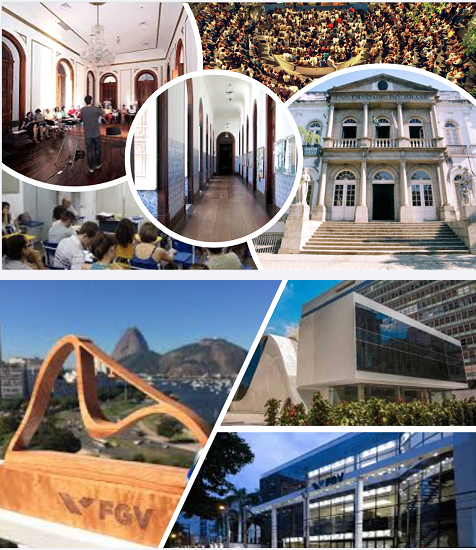
The 2026 Critical Perspectives on Accounting Conference is jointly organized by Federal University of Rio de Janeiro, Management and Accounting School (UFRJ-FACC), and Getulio Vargas Foundation, Brazil’s School of Public and Business Administration (FGV-EBAPE).
Emerging Scholars Colloquium: July 13, 2026
Main Conference: July 14-16, 2026
Follow us on social media!


Register here: https://www.even3.com.br/cpa2026/
Venue: EBAPE (FGV) – R. Jorn. Orlando Dantas, 30 – Botafogo, Rio de Janeiro
📍 Click here to view the venue and get directions on Google Maps.
Program
08h30–09h00 — ESC Registration
09h00–09h15 — ESC Opening Session
09h15–10h15 — Keynote
Publishing critical research in “international” journals

Yves is Full Professor of Accounting at Université Laval, in Québec City. His qualitative research focuses on three main areas. He has studied the world of professional accountants, particularly the nature of their claims to expertise in both emerging and established fields. Yves has also examined corporate governance processes within the boards of directors of publicly traded companies. Finally, he has conducted epistemological studies focusing, for example, on performativity pressures in academia. In 2019, the Canadian Academic Accounting Association awarded him the “Haim Falk Award for Distinguished Contribution to Accounting Thought.” Yves has been co-editor of the journal Critical Perspectives on Accounting (2014-2026). He also serves as an editor for The Accounting Review (2023-2029).
10h15–10h45 — Coffee break
10h45–12h45 — Research Project Parallel Sessions
12h45–13h45 — Small Lunch
13h45–15h45 — Research Project Parallel Sessions
15h45–16h15 — Coffee break
16h15–17h15 — ESC Mini-Course
Mini-Course: Accounting’s Silent Archives
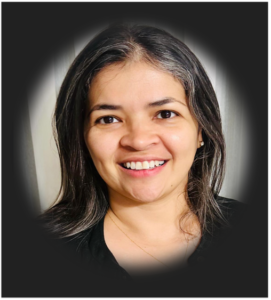
Adriana Rodrigues Silva is an Assistant Professor at the School of Management and Technology of the Santarém Polytechnic University, Portugal, and an integrated researcher at the Research Center in Accounting and Taxation (CICF), at IPCA. She serves as External Liaison for Latin America of the Accounting History Special Interest Group (AHSIG) of the British Accounting and Finance Association (BAFA) and is amember of the Latin American Network of Accounting in History. Her research is situated within critical and interpretive accounting and accounting history. Her work foregrounds historically subordinated voices and develops historical and colonial/decolonial approaches to understand accounting as both a technology of domination and a contested space.
Mini-Course: Technique, Socialization, and Politics: A Practical Guide to the Review Process

Daniel Martinez is an Associate Professor of Accounting and Management Control at HEC Paris. His research examines accounting information systems in organizations, markets, and social movements. Drawing on fieldwork in Guatemala and El Salvador, he has studied accounting and accountability practices in international development NGOs and social movement organizations. He has also researched Colorado’s cannabis market, exploring how accounting participates in creating and governing contested commodity markets. He has authored and co-authored book chapters and articles in leading journals. He is Associate Editor of Critical Perspectives on Accounting and serves on the editorial board of Accounting, Organizations and Society. Cines.
Mini-Course: Counter-Accounting Courses in Higher Education
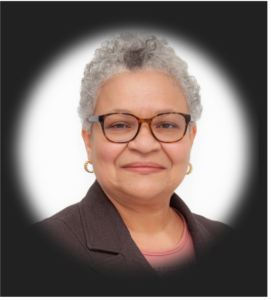
Mary Vera-Colina holds a Ph.D. in Economics and a Master’s degree in Business Administration. She is a Certified Public Accountant and an economist, and graduated from the University of Zulia, Venezuela. Since 2010, she has been a full-time professor at the National University of Colombia, Bogotá, where she attained the rank of Full Professor in 2025. She is also the founder and director of the research group “Interdisciplinary Studies on Management and Accounting – INTERGES.” Her teaching and research focus on strategy and financial management in small and medium-sized enterprises (SMEs), accounting and management education, and gender studies. She is involved in projects and networks that promote international engagement, particularly North–South interaction, as well as diversity and inclusion.
17h15–18h00 – Transfer to UFRJ-FCC Building – Av. Rui Barbosa, 762.
18h00-19h30 — CPA Preliminary Opening Panel (open to all participants)
Venue: Fórum de Ciência e Cultura da UFRJ – Av. Rui Barbosa, 762 – Flamengo
19h30–20h30 — Socio gathering
A social gathering featuring music and light refreshments.
All registered CPA participants are welcome!
Local: Fórum de Ciência e Cultura da UFRJ – Av. Rui Barbosa, 762 – Flamengo
18h00–19h30 — CPA Preliminary Opening Panel (open to all participants)
“Accounts of Genocide – debating accounting and settler colonial violence through the lens of Palestine”

Panelist mini-bio here.
Panel detailed content here.
19h30–20h30 — Socio-cultural Gathering
A social gathering featuring music and light refreshments. All registered CPA participants are welcome.
08h00–09h00 — CPA Registration
09h00–09h15 — Opening Session
09h15–10h15 — Keynote
Opening SessionThe Crises of Neoliberalism and the Rise of Neoliberal Facism
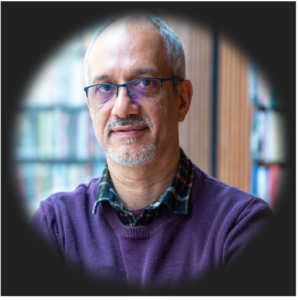
Alfredo is Professor of International Political Economy at Queen’s University Belfast, Visiting Professor at the University of Johannesburg (South Africa), LUT University (Finland), and the Università degli Studi della Campania ‘Luigi Vanvitelli’ (Italy), Senior Research Associate at the University of Brasília (Brazil), and Visiting Research Professor at SOAS University of London (UK). He was Senior Economic Affairs Officer at the United Nations Conference on Trade and Development (UNCTAD) in Geneva and has taught at universities and research institutions in Belgium, Brazil, Canada, China, Finland, Germany, Italy, Japan, Mozambique, South Africa, Switzerland, and the UK. His publications include 20 books, 85 journal articles, 60 book chapters, and 30 reports for the UN and other international agencies.
10h15–11h00 — Coffee break & building change
11h00–13h00 — Paper Session 1
13h00–14h00 — Small Lunch
14h00–16h00 — Paper Session 2
16h00–16h30 — Coffee break
16h30–18h30 — Paper Session 3
Free Night
8h30 — CPA Support Desk
09h00–11h00 — Paper Session 4
11h00–11h30 — Coffee break
11h30–13h30 — Parallel Workshops & Panels
PANEL 1: “Qualitative Research and Critical Accounting (QRCA): ¿Quiénes somos y qué hacemos?. Una red de interacción desde América Latina”

PANEL 2: “Contabilidade e Memória: Poder, Arquivo e Resistência na América Latina”

PANEL 3: “Recount Photographic Agora Pannel: Visual dialogues at the frontier of accounting”

PANEL 4: “Post-Capitalist Accounting Panellists’ Biographies”

PANEL 5: “Uma História Subalterna da Emergência de Paradigmas de Pesquisas Contábeis Alternativas no Brasil”

PANEL 6: “Towards a radical ontology of critical accounting research”

Panelist mini-bios are included in the Full Program.
13h30–14h30 — Bus transfer to social venue
16h30–18h30 — Conference Social (Fogo de Chão Churrascaria)
08h30–09h00 — CPA Support Desk
09h00–11h00 — Paper Session 5
11h00–11h30 — Coffee break
11h30–13h30 — Paper Session 6
13h30–14h30 — Small Lunch
14h30–16h30 — Paper Session 7
16h30–17h00 — Coffee break & building change
17h00–18h30 — Panel
“Critical Accounting Research and Community Building in Troubled Times”

Panelist mini-bio here.
18h30–19h00 — Closing Session
Free Night
Language
The languages spoken during CPA-2026 and the ESC colloquium will be Portuguese, Spanish, French, and English.
Simultaneous translation services will be provided for the keynote lectures between Portuguese, English, and Spanish. Please bring your cellphones and earphones.
Session and Presentation Dynamics
Authors of accepted papers are responsible for presenting their own submitted papers.
All authors and co-authors (and papers or other formats), upon submitting, agree to serve as discussants for other papers and/or session moderators.
Accepted submissions can be presented in their original language. However, when the author’s native language is Portuguese, Spanish, or French, the organizing committee recommends the use of presentation slides in English to enhance feedback from international audiences. When the author’s native language is English, the organizing committee recommends the use of presentation slides in one of the three other languages to facilitate comprehension and enhance feedback from non-English-speaking audiences.
A recommended layout format for all presentations is available at:
Early Bird Fees (until March 30, 2026)
Categories (amounts in US dollars)
(1) Full fee for international authors and participants: US$500
(2) Authors and participants working in Latin American countries: US$250 (*)
(3) Authors and participants working in Brazil: US$250 (*)
(4) Authors and participants in online sessions: US$100
(5) Students (phd, masters, or undergrad): US$150 (*)
Regular fees (from April 1 up to May 30th*)
Categories (amounts in US dollars)
(1) Full fee – international authors and participants: US$600
(2) Authors and participants working in Latin American countries: US$300 (*)
(3) Authors and participants working in Brazil: US$300 (*)
(4) Authors and participants in online sessions: US$150
(5) Students (phd, masters, or undergrad): US$150 (*)
(6) Social Event Fee for companions: US$50,00 (does not include conference access)
*Submitting Authors Registration Deadline: April 30, 2026. Registration deadline is motivated by conference operational logistics details.
Colloquium Registration (up to May 30th):
Categories (amounts in US dollars)
• Presenting Students, presenters, and moderators: 0.00 (*)
• Other registered conference participants: US$50.00
(*) To confirm registration in these categories, the participant will need to present documentation proving affiliation with an institution in Latin America or Brazil/Brazil or proof of active graduate/undergraduate student status.
Scientific and Organizing Committees
⦁ Adriana Rodrigues (Santarém Polytechnic University)
⦁ Alessandro Ghio (ESCP Business School)
⦁ Alex Faria (Ebape/FGV)
⦁ Camila Nganga (Federal University of Uberlandia)
⦁ Candy Chamorro Gonzáles (Universidad Católica Luis Amigó)
⦁ Carlos Larrinaga (Universidad de Burgos)
⦁ Charles Cho (York University)
⦁ Charlotta Bay (Stockholm University)
⦁ Cheryl R. Lehman (Hofstra University)
⦁ Christine Cooper (Edinburgh University)
⦁ Christine Gilbert (University of Laval)
⦁ Daniel Martinez (HEC Paris)
⦁ Francisco Javier Husillos Carques (Universidad Pública de Navarra)
⦁ Hector Sarmiento (Politécnico Colombiano)
⦁ Iago França Lopes (Federal University of Rio de Janeiro)
⦁ Jane Andrew (University of Sydney)
⦁ Jérémy Morales (University of Bristol)
⦁ Jim Haslam (University of Durham)
⦁ João Paulo Resende (Glasgow University)
⦁ Luciana Sardeiro (Federal University of Tocantins)
⦁ Marcelo Castañeda (Federal University of Rio de Janeiro)
⦁ Mary Vera-Colina (Universidad Nacional de Colombia)
⦁ Ricardo Lopes Cardoso (Ebape/FGV)
⦁ Sandra Maria Silva (Estadual University of Feira de Santana)
⦁ Stewart Smyth (Cork University Business School)
⦁ Tassiani Aparecida dos Santos (University of Durham)
⦁ Yves Gendron (University of Laval)
Local Organizing Committee
ESC Local Committee
⦁ Adriana Rodrigues (Universidade Politécnica de Santarém)
⦁ Thauan Carvalho (Universidade Federal Fluminense)
⦁ Tania Almeida (Universidade do Estado do Rio de Janeiro)
⦁ Camila Silveira (Universidade Federal do Rio de Janeiro)
⦁ João Henrique Zupirolli (Universidade Federal do Rio de Janeiro)
⦁ Juliette Tavares (Universidade Federal do Pará)
⦁ Levy Ruan Silva (Universidade Federal da Paraíba)
⦁ Lourival Junior (Universidade Federal do Rio de Janeiro)
Jointly Organized by:

Technical Support:

Sponsors:

| Main Conference: July 14-16, 2026
Submission Start: October 15, 2025 |
Emerging Scholars Colloquium: July 13, 2026
Submission Start: From February 2, 2026 |
(*) Early submissions and registrations are welcome
(**) We recommend that authors with special visa requirements or early travel authorizations and funds submit their submissions in advance and contact the event coordinator at cpa2026@facc.ufrj.br .
All submissions can be written in Portuguese, Spanish, English, or French.
Each author may have up to 3 submissions in any format (paper, research communication, workshop, or panel).
Submission Types:
Full Paper:
Authors may submit papers of up to 20,000 words (preferably in .doc format), including references. Papers with a reasonable level of development will be considered. Doctoral students whose dissertations are nearing completion may also submit full papers.
All full paper submissions for the 2026 CPA Conference and Colloquium must be anonymous.
• It is PERMITTED to submit NEW upgraded versions of papers already presented at other conferences.
• It is PROHIBITED to submit papers that have already been approved, are in pre-print, or have been published in journals.
Arts-Based Research Communications:
Works based on poetry, music, photos, videos, and cartoons may be displayed in an art gallery.
The standard submission must include the artwork followed by a summary of the discussion articulating the connection between the artwork and accounting, between 1,000 and 3,000 words, in a .doc file.
Authors are responsible for providing the poster (or any other necessary media) in the format agreed upon with the conference organizers. Please send an email to cpa2026@facc.ufrj.br.
Concurrent Panels and Workshops:
Proposals for panels or workshops scheduled to run in parallel with the conference will be considered for inclusion in the program.
Submissions for this type of activity must describe, between 1,000 and 3,000 words, in a .doc file: (i) title of the activity; (ii) a brief description of the topic, its relevance to critical accounting, and the anticipated dynamics; (iii) full names, affiliations, photo, and mini-CVs of the activity participants.
Each panel or workshop participant may be included in only one submitted proposal to provide opportunities for multiple researchers, groups, and topics.
ESC Colloquium
Graduate students (doctoral and master’s) may submit a 2,000-word abstract of their thesis or dissertation proposal (in .doc format), specifying the stage of their doctoral or master’s degree program.
Submission Template:
A recommended layout format for all submissions is available at: Doc File Submission Template
Submissions
https://www.even3.com.br/cpa2026/
The activities of the CPA 2026 Conference and Colloquium will be held at the Federal University of Rio de Janeiro an'd the Getulio Vargas Foundation - EBAPE, at the following addresses:
Av. Rui Barbosa, 762 - Flamengo, Rio de Janeiro - RJ, 22250-020
Rua Jornalista Orlando Dantas, 30 - Botafogo, Rio de Janeiro - RJ, 22231-010 Edifício Roberto Campos e Centro Cultural (auditorium)
CPA conference and ESC attendees are free to choose their own accommodations.
However, the conference organizers offer some options through a partner agency (Follow-Up), available at the following link:

| Hotels with conference support:
The conference organizers will provide students (acting as guides) to escort participants to/from the venues and hotels in Praia de Botafogo, as well as to/from Botafogo and Flamengo subway stations at predetermined times. |
These hotels are:
|
Travel Arrangements:
Arriving in Rio – Main Airports
|
|
| Regarding VISA information, we recommend accessing official links from the Brazilian External Relations Ministry at: https://www.gov.br/pt-br/servicos/obter-visto-para-viajar-ao-brasil |
Registration (CLOSED) & Program Details at:
https://www.even3.com.br/cpa2026/
Contact us:
cpa2026@facc.ufrj.br
Administrative, Operational, and Financial Support
For Conference Operational Support:
Raquel@skl.tur.br
For accommodations and travel support:
https://www.net-expert.com/followuptour/Site/Contato/?setor=eventos